HEDGE FUNDS ARE SUSPICIOUSLY popular these days among financial cognoscenti. The Institute for Private Investors' survey of extremely wealthy investors indicated that about 80% have some investment in hedge funds and nearly a third have more than 25% of their assets in them. Private and public pension funds are increasing their stakes in hedge funds in the hopes of scoring double-digit returns on investments. This raises public policy concerns as poor performance will not affect just rich investors but also put employee pensions and taxpayers at risk.
Undoubtedly, some of the 8,219 hedge funds will produce excellent returns for the $1.2 trillion in assets entrusted. Yet it is almost certain that in aggregate, hedge fund returns will be disappointing. It just isn't possible for every manager -- like Lake Wobegon's children -- to be above average. Indeed, their proliferation suggests a much more interesting investment opportunity: selling hedge funds short.
Think like a hedge fund manager for a moment. Is it possible that large classes of these funds with similar strategies will actually beat the market, especially net of their hefty fees? If all the funds "exploit market inefficiencies," as they claim to, will there be enough inefficiencies to go around? Or will the enormous growth of the industry cannibalize those fleeting opportunities? Because of their size, number, leverage and active strategies, hedge funds now represent more than half of the trading in many markets. If they all make the same market bets, can anyone make money? And if they take opposing sides of the same trade, half are assured of losing. Either way, it will be very hard to add value and cover fees, commissions and other costs.
While this critique can also be applied to mutual funds and other active managers, the scale of fees and expenses incurred by hedge funds puts them in a category of their own. Because of their leverage and turnover, hedge funds' costs per unit of capital are many times those of mutual funds -- and so are their fees. Their performance fee structure is a "heads we win, tails we don't lose" proposition for the managers (at the investor's cost).
So, why do people still throw money at them? Largely because of wishful thinking and behavioral quirks. Most people recognize that stocks and bonds will not continue to produce the double-digit returns they have in the past three decades. However, some don't want to accept that those returns are unavailable anywhere. So, these people irrationally wish for a new type of investment - hedge funds - that can produce these kinds of gains. This is paradoxical, considering that the funds invest primarily in the very same securities that they are expected to outperform-namely stocks and bonds. Any individual investor may be right to think that his hedge funds -- like his children -- are exceptional. But, if everyone believes it, that's collective folly.
This folly persists because hedge funds benefit from several well-documented anomalies (more formally called cognitive biases) in the way people make decisions.
The first is the "winner's curse," named for the tendency of people to overbid in auctions (therefore the winner ultimately feels cursed). The hiring of hedge funds is like an auction. Investors are guessing at the future performance of these enterprises. Some guesses will be high, others low. Those most bullish about a fund's prospects will invest. The result is that each fund is valued by those who are most optimistic about its prospects.[drawing]
Overconfidence, the second peculiarity, aggravates this problem. In Nobel laureate Daniel Kahneman's words, decision-making involves a combination of "high confidence and low accuracy." Kahneman notes that "hindsight bias" worsens overconfidence. We do not learn from experience. Even when we get feedback such as investment returns, we tend to attribute the bad outcomes to luck or other people's failings and the good outcomes to skill.
A behavioral aberration called "base rate neglect" also contributes. The Lake Wobegon effect is real. Studies have found that almost all of us believe we are safer-than-average drivers. Similarly, all hedge-fund investors believe their fund is above average. When we make assessments, we tend to focus on the particulars of the situation and ignore the larger context. In assessing hedge funds, that means we put too much weight on the fund itself and not enough on the fact that these vehicles collectively fail to achieve returns that compensate for their very high fees.
Of course, there's another reason people overvalue hedge funds that is not a behavioral quirk. Millions (perhaps billions) of dollars are being spent convincing us that they are good investments. Much, much less is spent arguing the contrary. It would be unusual if this marketing did not affect our judgment.
What's a rational person to do? Not investing in hedge funds is a good start. But, ideally, you would like to invest less than zero -- in other words, to sell them short. While logical, this is difficult to do. But nothing is out of the reach of Wall Street financial engineers. One of their tools is called a "swap" -- a basic financial agreement between two parties. Jane, for example, could agree to pay Fred the return on a hedge fund in exchange for a payment from Fred of a short-term interest rate. Fred benefits if the hedge fund's returns are good while Jane benefits if returns are poor. Effectively, Jane has sold the hedge fund short.
Swaps could be an effective way for investors hankering to be part of hedge funds closed to new investors. In effect, they could bet on continued good returns from the fund while bearish investors would be happy to bet on faltering returns. Now, it must be mentioned that swaps entail significant risk and require very substantial capital. They should be engaged in only by very sophisticated investors. Of course, that is supposed to be true of hedge funds, too.
What would happen if investors could short hedge funds? Very likely, sellers would zero in on funds of hedge funds to sell short. They have two layers of fees, which reduces their performance. In addition, they diversify, which reduces the risk -- for both investing and shorting. Making this short interest visible would provide a valuable signal to investors currently funneling billions of dollars into these outfits.
Last month the European Central Bank cited hedge funds as a "major risk" to financial stability and further noted that the industry "warrants close monitoring despite the essential lack of any possible remedies." The Securities and Exchange Commission's effort to monitor them has been frustrated by a court ruling. While such monitoring is desirable, the ability to short hedge funds would also help maintain rationality. There have also been a number of frauds exposed recently. Short sellers have been effective in sniffing out fraud in other venues and could play a useful role here too.
The creation of a short interest in hedge funds would also offer a new opportunity: The funds could short each other, and new entrants could spring up to short all the existing players. It's just the sort of game hedge funds love to play.
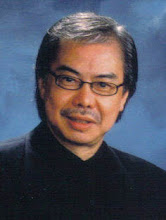
JONATHAN REISS, former head trader in international bonds for Sanford C. Bernstein & Co., is founder of Analytical Synthesis, a research firm focused on financial innovations in the public interest. He says he is both a safer-than-average driver and a better-than-average investor.
Showing posts with label CPO. Show all posts
Showing posts with label CPO. Show all posts
Tuesday, October 9, 2007

Friday, June 29, 2007
Kuala Lumpur Crude Palm Oil Futures : Forecast for the day, 29th June 2007 !
Kuala Lumpur Crude palm oil futures: Stopped out/S.A.
SEPT CPO futures closed higher by RM49 at 2383 on relatively high volume of 6,956 lots.
1. We were stopped out of CPO yesterday at 2364.
2. Yesterday we had called to go long if 2364 is touched.
3. We are going long because the stochastic is on buy signal from near an oversold area.
4. Also, price has move up above the lower Bollinger band.
5. But strictly speaking, we should not go long as this market is prone to U-turn back down.
6. As such a conservative trader (and we) would rather stay aside instead of going long today.
If you are aggressive then you can turn long, but place sell-stop below day before
yesterday’s low, i.e. @ 2314 OL.
7. The next up target is 2560 and the next down target is 2153.
General commentary: We were whipped by the rebounding market yesterday and stopped out at 2364. It was a tricky market alright, hence our suggestion to stay out today.
Next upside targets: 2560/2749 (hit)/3313 (targets revised on June 5)
Downside support: 2153
Ichimoku chart: (Based on kumo (clouds), CPO is long. Kumo support is at 2111. Ichimoku chart will turn short @ 2110 OL (updated on June 11, 2007)
Average True Range for CPO: A.T.R. is 85.36 for CPO. This implies you need to put a stop above/below this A.T.R. or you can get stopped out due to the volatility factor. We advocate a 1.5 x or 2 x the ATR. We are using a 5 days ATR.
To get the daily KL Stock Crude Palm Oil Futures, subscribe to our daily stock and futures newsletter at http://www.picapital.com.my/
SEPT CPO futures closed higher by RM49 at 2383 on relatively high volume of 6,956 lots.
1. We were stopped out of CPO yesterday at 2364.
2. Yesterday we had called to go long if 2364 is touched.
3. We are going long because the stochastic is on buy signal from near an oversold area.
4. Also, price has move up above the lower Bollinger band.
5. But strictly speaking, we should not go long as this market is prone to U-turn back down.
6. As such a conservative trader (and we) would rather stay aside instead of going long today.
If you are aggressive then you can turn long, but place sell-stop below day before
yesterday’s low, i.e. @ 2314 OL.
7. The next up target is 2560 and the next down target is 2153.
General commentary: We were whipped by the rebounding market yesterday and stopped out at 2364. It was a tricky market alright, hence our suggestion to stay out today.
Next upside targets: 2560/2749 (hit)/3313 (targets revised on June 5)
Downside support: 2153
Ichimoku chart: (Based on kumo (clouds), CPO is long. Kumo support is at 2111. Ichimoku chart will turn short @ 2110 OL (updated on June 11, 2007)
Average True Range for CPO: A.T.R. is 85.36 for CPO. This implies you need to put a stop above/below this A.T.R. or you can get stopped out due to the volatility factor. We advocate a 1.5 x or 2 x the ATR. We are using a 5 days ATR.
To get the daily KL Stock Crude Palm Oil Futures, subscribe to our daily stock and futures newsletter at http://www.picapital.com.my/
Tuesday, June 19, 2007
Kuala Lumpur : Crude Palm Oil Futures
Kuala Lumpur crude palm oil futures: Maintain long/Sell-stop @ 2424 OL/F.B. @ 2501/T.P. @ 2560
SEPT CPO futures closed higher by RM32 at 2457 on relatively high volume of 11,525 lots.
1. We were again correct in calling for a buy and a “gap” to make up for the change of contract
month.
2. We are maintaining long but place sell-stop at 2424 OL to exit longs. If you want a tighter
stop, then use yesterday’s low, i.e. @ 2444 OL to exit longs.
3. If CPO breaches 2500, then “further buy” @ 2501 OH.
4. Next target is still at 2560.
General commentary: We were right about our “F. Tam white inside out up” pattern, which resulted in a higher close, up by RM32. Today CPO may consolidate or may rally to test 2560. We doubt it will stage a sharp pullback. But in case it does, our sell-stops are either at 2444 OL or 2424 OL.
Next upside targets: 2560/2749 (hit)/3313 (targets revised on June 5)
Downside support: 2466(hit)/2393(hit)/2307/2223/2153
Ichimoku chart: (Based on kumo (clouds), CPO is long. Kumo support is at 2111. Ichimoku chart will turn short @ 2110 OL (updated on June 11, 2007)
Average True Range for CPO: A.T.R. is 112.36 for CPO. This implies you need to put a stop above/below this A.T.R. or you can get stopped out due to the volatility factor. We advocate a 1.5 x or 2 x the ATR. We are using a 5 days ATR.
To know more about the daily KL crude palm oil futures, subscribe to our daily stock and futures newsletter at http://www.picapital.com.my/
SEPT CPO futures closed higher by RM32 at 2457 on relatively high volume of 11,525 lots.
1. We were again correct in calling for a buy and a “gap” to make up for the change of contract
month.
2. We are maintaining long but place sell-stop at 2424 OL to exit longs. If you want a tighter
stop, then use yesterday’s low, i.e. @ 2444 OL to exit longs.
3. If CPO breaches 2500, then “further buy” @ 2501 OH.
4. Next target is still at 2560.
General commentary: We were right about our “F. Tam white inside out up” pattern, which resulted in a higher close, up by RM32. Today CPO may consolidate or may rally to test 2560. We doubt it will stage a sharp pullback. But in case it does, our sell-stops are either at 2444 OL or 2424 OL.
Next upside targets: 2560/2749 (hit)/3313 (targets revised on June 5)
Downside support: 2466(hit)/2393(hit)/2307/2223/2153
Ichimoku chart: (Based on kumo (clouds), CPO is long. Kumo support is at 2111. Ichimoku chart will turn short @ 2110 OL (updated on June 11, 2007)
Average True Range for CPO: A.T.R. is 112.36 for CPO. This implies you need to put a stop above/below this A.T.R. or you can get stopped out due to the volatility factor. We advocate a 1.5 x or 2 x the ATR. We are using a 5 days ATR.
To know more about the daily KL crude palm oil futures, subscribe to our daily stock and futures newsletter at http://www.picapital.com.my/
Subscribe to:
Posts (Atom)